


Amora: Romance Novels & Books
4.3274.00 Reviews
App Specs
- Version
- 1.15.2
- Updated On
- License
- Free
- Downloads
- 100,000+
- Developer
- Riseforward Ltd.
- Categories
- Books & Reference
- Platform
- Android
Screenshots
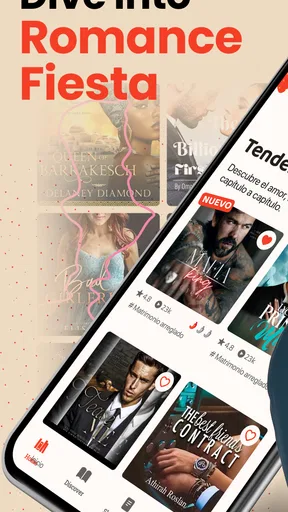

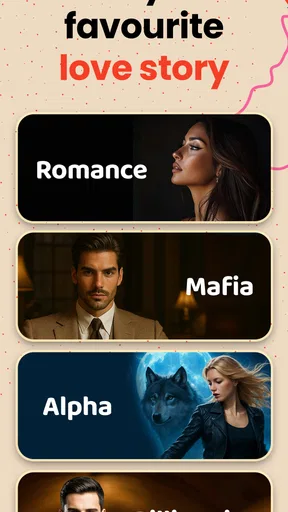
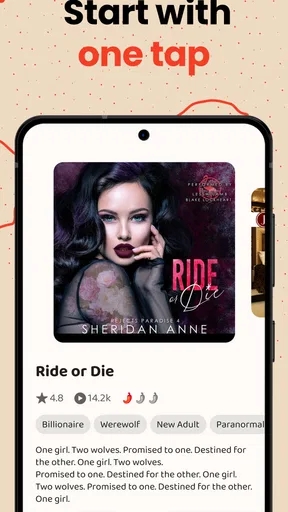
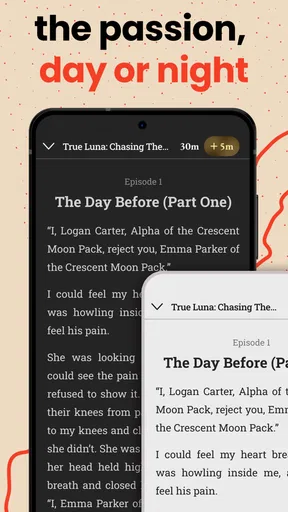
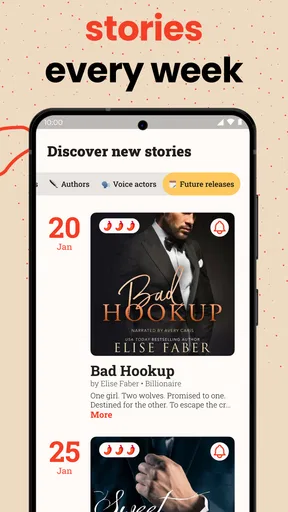
 Analysis by AppCompare
I opened Amora expecting a simple romance-reading app, but its appeal became clearer after spending time with it: this is a focused place for listening to romantic novels and shorter love stories rather than a broad digital library. That narrow purpose is useful when I already know the mood I want. Instead of browsing across unrelated books, I can stay inside romance and move quickly toward something suitable for a quiet evening, a commute, or a few minutes before bed.
It is a free Books & Reference app from Riseforward Ltd., available for Android devices running version 8.0 or later. The Teen content rating is worth noticing because the romantic material is aimed at older readers and listeners, not young children. The app has passed the early discovery stage with more than a hundred thousand installs, and its average rating sits at 4.3 from roughly 1.6 thousand ratings. Those figures suggest a healthy level of interest, although they do not replace deciding whether its reading style suits you.
How Amora feels in everyday use
The central idea is straightforward: choose romance stories and listen to them online. I found that simplicity more valuable than it may sound. Many reading services try to serve every genre at once, which can make a specific search feel like work. Amora keeps the emotional tone consistent, so the browsing experience is better suited to someone who wants romance without filtering through crime, history, science fiction, or general nonfiction.
The strongest everyday scenario is hands-free listening. I would use it while preparing dinner, folding laundry, or taking a walk when I wanted a story but did not want to hold a phone. A short romantic story also fits the gaps that are too brief for a full film or a long reading session. That makes the app feel less like a replacement for every book service and more like a convenient companion for a particular kind of downtime.
There is also a useful distinction between a romance novel and a romantic short story. A novel can carry a longer emotional arc, while a short story gives me a complete change of mood without asking for a large time commitment. I recommend choosing between them based on the moment rather than treating one format as automatically better. If I have an uninterrupted evening, a longer story makes sense; if I am waiting for an appointment, the shorter format is easier to manage.
The best reason to try Amora is its focused listening experience, not the promise of replacing a complete reading ecosystem. That distinction matters. People who want a huge mixed-genre catalog, advanced library management, or a traditional ebook-first workflow may feel more comfortable with a general reading platform. Amora makes more sense for listeners who already know that romance is the category they return to most often.
A focused catalog changes how I choose
With a specialized app, the advantage is not necessarily that every story will match my taste. Romance is a wide category, covering different tones, pacing, character dynamics, and levels of emotional intensity. The benefit is that the search begins in the right neighborhood. I spend less time explaining to the app that I want a love story and more time deciding which kind of love story fits my mood.
Worth Reading Before You Choose

EA SPORTS FC Mobile 26 Is a Bigger Football Game, but It Takes Time

Flipboard Shows What News Apps Must Do Beyond the Feed

Switching to Android Auto Means Rethinking Your Driving Routine

Google Calendar Makes a Crowded Week Easier to Manage

Ludo King Makes the Most of the Minutes Between Plans

Baby Panda World Brings Quick Play to Modern Phones, but Its Game Library Feels Busy
My practical advice is to treat the first few selections as sampling rather than a commitment. Start with a shorter story if you are unsure about the narration style or the writing approach. If that works for you, move to a longer novel. This reduces the frustration of beginning an extended title when the tone is not what you expected.
Another useful habit is to separate listening situations. I would keep lighter romantic stories for busy daytime tasks and reserve more absorbing novels for walks or evenings when I can follow the plot. Audio demands attention differently from reading, and a complicated relationship plot can become difficult to follow when I am constantly interrupted. The app is convenient, but convenience does not remove the need to choose the right story for the right activity.
What the current version tells me
The current version is 1.15.2, while the app was released on May 8, 2025. That combination suggests a product that has already moved beyond its first public build and is being maintained rather than left untouched after launch. I see that as a positive sign for anyone considering a new app, because an actively evolving product has a better chance of smoothing out early rough edges.
At the same time, I would not interpret a version number as proof that every part of the experience is mature. A newer build can reflect routine maintenance, refinements, or changes that are important internally but not immediately visible to listeners. My judgement is therefore practical: the app is established enough to try, but I would still keep expectations realistic about the polish of a specialized service compared with long-established reading platforms.
The release timing also affects how I view the audience size. More than a hundred thousand installs is meaningful for a focused romance app, yet it remains different from the scale of a mainstream general-purpose book service. That smaller footprint can be appealing if I prefer a more concentrated experience, but it may also mean that the breadth and consistency of the catalog are especially important factors to evaluate personally.
Riseforward Ltd. has positioned the product around a clear use case rather than presenting it as an all-purpose reference tool. I appreciate that direction. A service is easier to judge when I know what it is trying to do. Here, the question is not whether it replaces every book app; it is whether it gives me enjoyable romantic listening with less effort than my usual alternatives.
How the evolution affects existing listeners
If I had installed Amora near its release and returned to the current build, I would mainly look for stability and continuity. Existing users generally want their listening routine to remain understandable after updates. A version change should not force a person to relearn the entire experience just to find another story. Since the app remains centered on romance novels and short stories, its core identity appears consistent.
For a returning listener, the most sensible approach is to update before starting a long novel, especially if the app has been unused for a while. That is not because an update guarantees a better story, but because current software is usually the sensible baseline for testing playback, browsing, and account access. I would also avoid judging the whole service from one title. A disappointing story may reflect personal taste, while repeated friction across several sessions points to the app itself.
People who already enjoy the app may value the free entry point, since it allows them to explore before deciding whether the service deserves a regular place in their routine. The important trade-off is that free access does not necessarily mean every part of the experience is cost-free. In-app purchases range from $6.99 to $519.99 per item, so I would review each purchase screen carefully and avoid assuming that the word “free” describes the entire catalog or every listening option.
That price range is the biggest reason I would recommend a deliberate trial rather than an automatic commitment. A low-cost purchase may be reasonable for a story I genuinely want, but the upper end is substantial enough that I would never tap through casually. If I were setting up the app for someone else, I would explain the purchase model first and encourage them to check exactly what an item unlocks before confirming anything.
Where it fits beside familiar alternatives
Compared with a general ebook reader, Amora is better when I want romance presented as the main experience and listening is more important than page-based reading. A conventional ebook app may be preferable when I annotate heavily, switch between many genres, depend on a large personal library, or want to read without audio. I would not choose Amora solely because I want “books”; I would choose it because I want romantic stories in an audio-friendly format.
Compared with a broad audiobook platform, the specialist approach can reduce browsing fatigue. I am less likely to wander through unrelated categories, and the mood is more consistent. The compromise is that a general audiobook service may offer a wider range of publishers, genres, narrators, and listening tools. If my interests change from romance to biography or mystery every few days, a broader service will probably give me better value.
Compared with reading short romance fiction on the web, Amora offers a more intentional listening destination. I do not have to turn every story into a makeshift audio experience, and I can use it during tasks where reading a screen is inconvenient. However, web reading may be better for people who want quick visual scanning, easy quoting, or a completely free experience without considering in-app purchases.
This is why I see Amora as complementary rather than universal. I might keep a general reading app for long-form ebooks and use Amora when I want a romance-focused listening session. That combination makes more sense to me than forcing one app to satisfy every reading habit.
Small workflow decisions that improve the experience
One non-obvious trade-off is attention. Audio feels effortless, but romance plots often depend on names, timing, and emotional changes that are easy to miss while multitasking. I get better results when I use the app for repetitive tasks rather than demanding work. Cooking a familiar meal is suitable; navigating an unfamiliar city while trying to follow a complicated storyline is not.
A second useful workflow is to test the app in both short and long sessions. A ten-minute sample tells me whether I like the general presentation, while a longer session reveals whether the narration and pacing remain comfortable. These are different tests. A story can sound appealing at first and become tiring after extended listening, so I would not make a purchase based on only a brief opening.
A third consideration is household use. Because the content rating is Teen, I would not hand the phone to a young child simply because the app is listed under books. I would treat the rating as a reminder to choose titles thoughtfully and to keep the app aligned with the intended listener. That is particularly important when a shared device is used by people with different ages or sensitivities.
A fourth tip is to decide on a spending boundary before browsing. The presence of in-app purchases means impulse decisions can happen at the exact moment a story becomes interesting. I prefer to explore first, identify what I actually want, and then make one considered purchase rather than repeatedly buying titles because the mood happens to be right. This is a simple habit, but it protects the main advantage of a free starting point.
The gaps I would want to see addressed
My main reservation is not the concept; it is the need to understand the depth of the experience before investing heavily. A romance-only catalog needs enough variety to prevent the same emotional patterns from feeling repetitive. Listeners will differ widely in what they consider enjoyable, so discovery tools and clear story context matter a great deal. Without that, a focused catalog can become restrictive instead of convenient.
I would also be cautious if my priority is ownership. Listening through an app is different from buying a file or keeping a traditional ebook. Anyone who builds a large personal library should think about how strongly they prefer permanent access, how often they change devices, and whether they are comfortable with a service-centered reading habit. Amora is most attractive when access and convenience matter more than collecting books in a conventional format.
The purchase range creates another point of friction. Since individual items can reach $519.99, I would inspect the wording and amount on every transaction screen. That does not make the app unsuitable, but it does make casual tapping a poor strategy. Readers who want a predictable, tightly controlled budget may prefer an alternative with a simpler subscription or purchase structure.
I would also skip Amora if I rarely listen to stories. The app’s identity is built around audio romance, so someone who prefers silent reading, highlighting, or visual browsing may gain little from it. Likewise, readers looking for reference books, textbooks, news, or a broad nonfiction collection should choose a service designed for those needs instead of expecting this specialized app to stretch beyond its purpose.
What I would watch as the app continues
The next stage of the product should be judged by how well it deepens the focused experience without making it complicated. I would watch for improvements that help me choose the right story, understand what a purchase includes, and return to listening smoothly. Those areas affect daily usefulness more than decorative changes because they shape whether I can move from opening the app to enjoying a story without hesitation.
I would also pay attention to how the catalog serves different romance preferences. A specialist app does not need to become a general bookstore, but it does need enough range to remain interesting to its own audience. The best evolution would preserve the simple romance-first identity while making discovery more precise for listeners who know whether they want a brief story, a longer emotional arc, or a particular mood.
For current users, the sensible expectation is gradual refinement rather than a completely different product. The current build, 1.15.2, shows that Amora has already progressed from its initial release, but the app still benefits from being evaluated as a focused and developing service. I would keep using it if the listening routine remains comfortable and the available stories continue to match my taste.
My final view is positive but selective. Amora is worth trying if you want romance novels and short stories in a listening-centered app, especially when your usual reading time is occupied by chores, walks, or short breaks. The free starting point lowers the barrier to testing it, while the Teen rating and in-app purchase range mean I would approach the catalog with some care. I would recommend it to a romance fan who values convenience and focus, but not to someone seeking a complete replacement for a broad ebook or audiobook library.
After using it, I see the app as a specialized tool with a clear personality. Its success depends less on being everything to everyone and more on making romantic listening easy enough that I return when I want that particular mood. If that describes your reading habit, Amora deserves a place on your shortlist; if you need wide genre coverage, permanent ownership, or a highly predictable pricing model, another reading service will likely suit you better.
Pros
- Large selection of romance novels across popular subgenres
- Personalized recommendations help discover books matching your tastes
- Offline reading makes stories accessible without a constant internet connection
- Adjustable text size and reading settings improve comfort
- New chapters and titles are added regularly to keep the library fresh
Cons
- Many books or chapters may require coins
- subscriptions
- or in-app purchases
- The free reading allowance can feel limited for frequent readers
- Some stories may contain uneven editing
- pacing
- or repetitive plots
- Availability of titles and features may vary by country or device
- The app may send frequent notifications about updates and promotions
FAQs for Amora: Romance Novels & Books
What is Amora: Romance Novels & Books?
Amora: Romance Novels & Books is a reading app focused on romance fiction, including serialized stories, contemporary relationships, dramatic love stories, and other romantic genres. Its library is designed for readers who enjoy discovering new authors and following ongoing narratives. Before downloading, remember that the available catalog, story length, and reading experience may vary depending on your device, location, and the app’s current content selection.
Is Amora: Romance Novels & Books free to use?
The app can generally be downloaded and used without an upfront purchase, but access to every chapter or feature may depend on the app’s monetization system. Some stories may be free, while others can require coins, credits, subscriptions, advertisements, or in-app purchases. Check the current pricing information in the Google Play Store or Apple App Store before making a purchase, especially if you plan to read several books.
Does Amora offer stories for offline reading?
Offline availability may depend on the specific version of Amora and the reading options provided for each story. Some reading apps allow users to save chapters for later, while others require an active internet connection to load content and synchronize progress. If offline reading is important to you, review the app’s latest store description and permissions, then test whether downloaded chapters remain accessible without Wi-Fi or mobile data.
Is Amora: Romance Novels & Books suitable for all ages?
Not necessarily. Romance platforms can include mature themes such as relationship conflict, emotional drama, suggestive situations, or adult-oriented content, depending on the story and author. Parents should check the official age rating and review the app’s content information before allowing younger users to install it. Readers should also use available content preferences, reporting tools, or parental controls when those options are provided.
What should I know about privacy and account requirements?
Amora may request an account or access to certain device information to save reading progress, personalize recommendations, process purchases, or synchronize activity across devices. The exact information collected can change with updates, so read the privacy policy and permissions shown on the official store listing before registering. Avoid sharing unnecessary personal details, and review subscription and payment settings carefully if the app offers premium reading plans.


